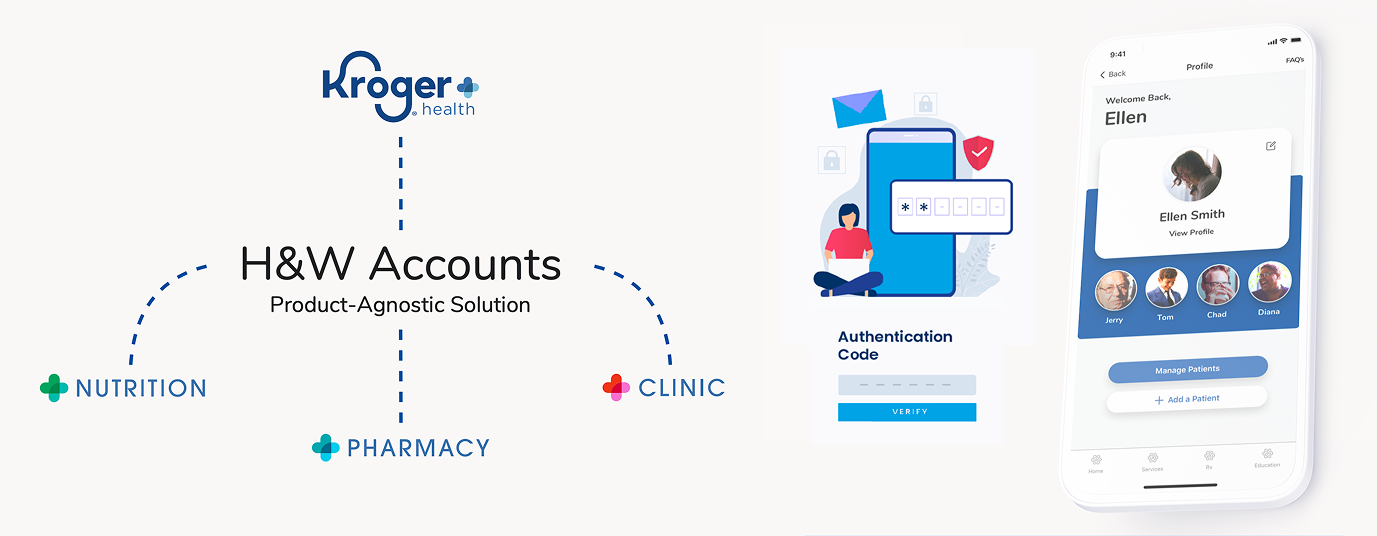
Transforming Pharmacy, Clinic, Nutrition, and Business experiences across ecosystems
The right to win.
Kroger isn’t just one company, it’s a portfolio of brands, stores, pharmacies, clinics, and yes even telehealth providers that span coast-to-coast.
When such a large entity has both the grocery prowess and convenience to allow their customers access to fulfill their healthcare needs, opportunities abound. The right to win exists. What isn’t obvious on the surface however, as is true for many longstanding corporations, are the technology barriers to unlock the value Kroger desires and seamless experiences that customers have come to expect.
Research tells all.
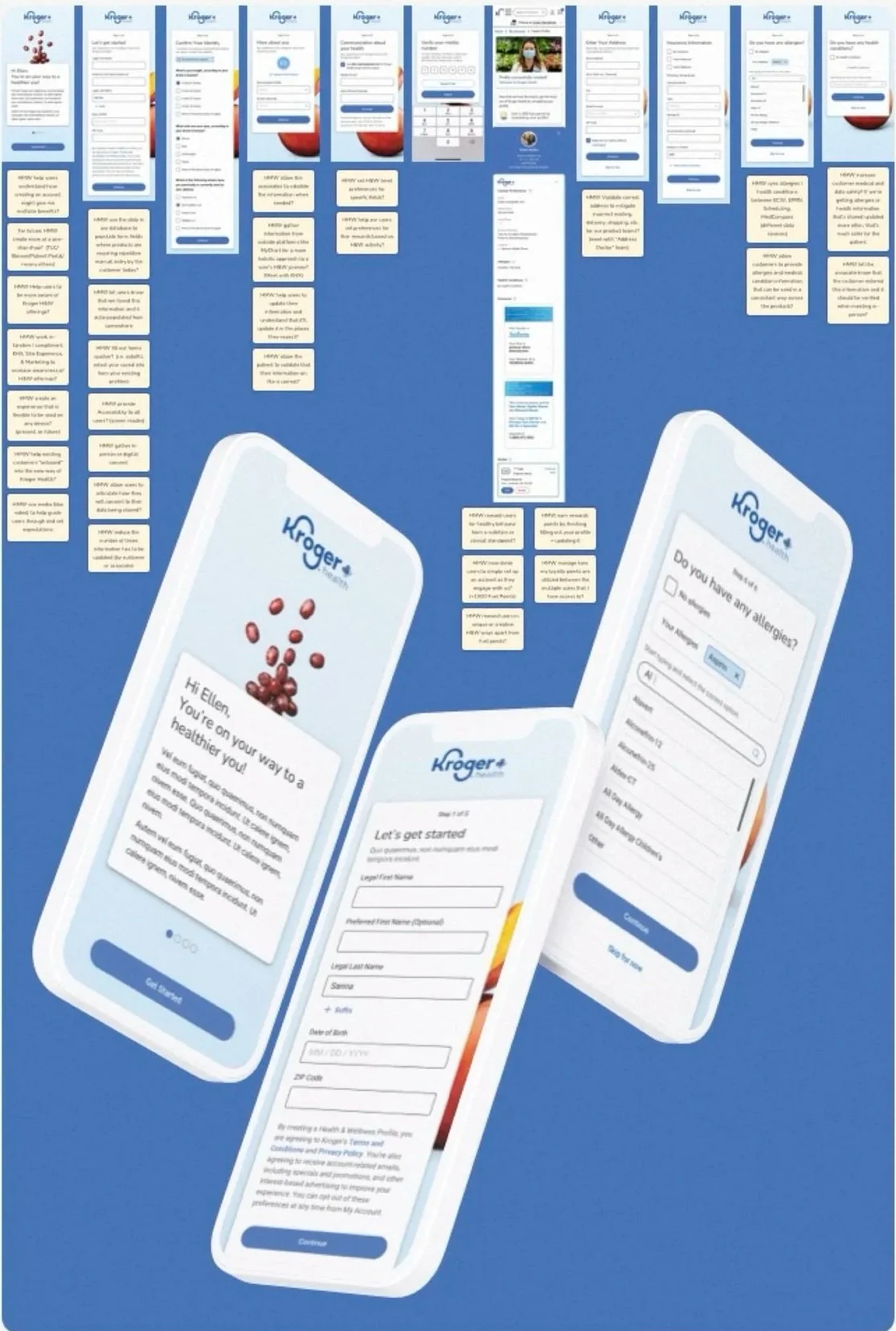
One great example of this: ethnographic customer research found something that wasn’t easy to see in the numbers. Customers agreed that many of the digital health tools Kroger offered would make their life easier, but the barriers to entry were too great and the technologies weren’t cohesive. A customer could have just set up a digital profile in the pharmacy, and when they walked 30 feet away to the clinic for their appointment, could be asked the same set of questions they were just asked at the pharmacy. Want to talk Nutrition? Get ready to enter the same information again. This digitally translated to friction, signing up for mutliple “accounts” with differing information overtime, rather than a seamless experience.
This isn’t surprising, however.
This is expected, after all. Often, we solve the immediate problems to bring customers value rather than solving with the ecosystem in mind. When the time comes to solve these sorts of problems, organizational change is required. High-level problems may surface from customer experiences, but stem from associate-facing applications or workflows riddled with problems that need solving, or an underlying technology infrastructure that needs rearchitected: no small feat. The moments that we say “yes” to solving these critical unlocks are when service design is invaluable.
Enter, service design.
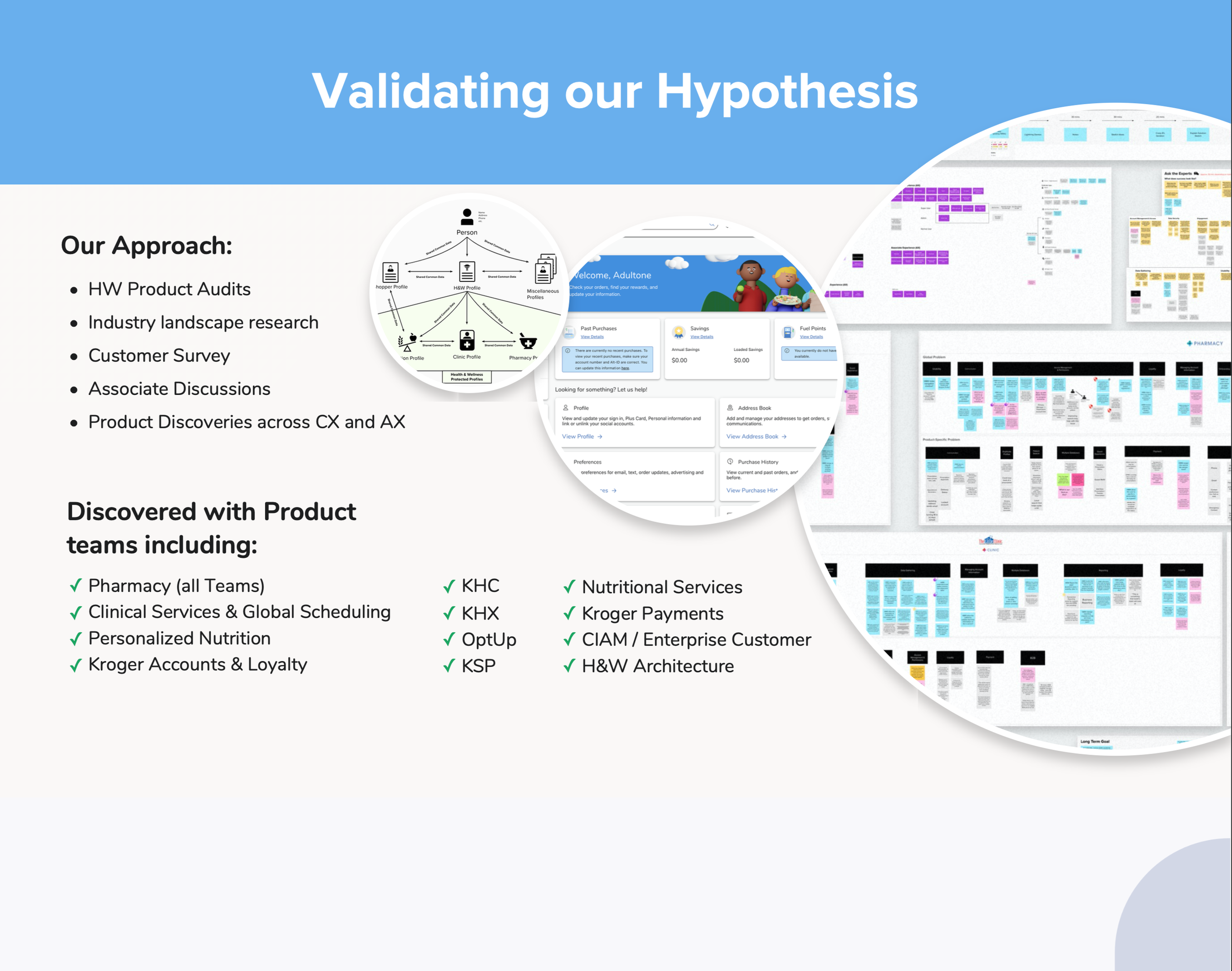
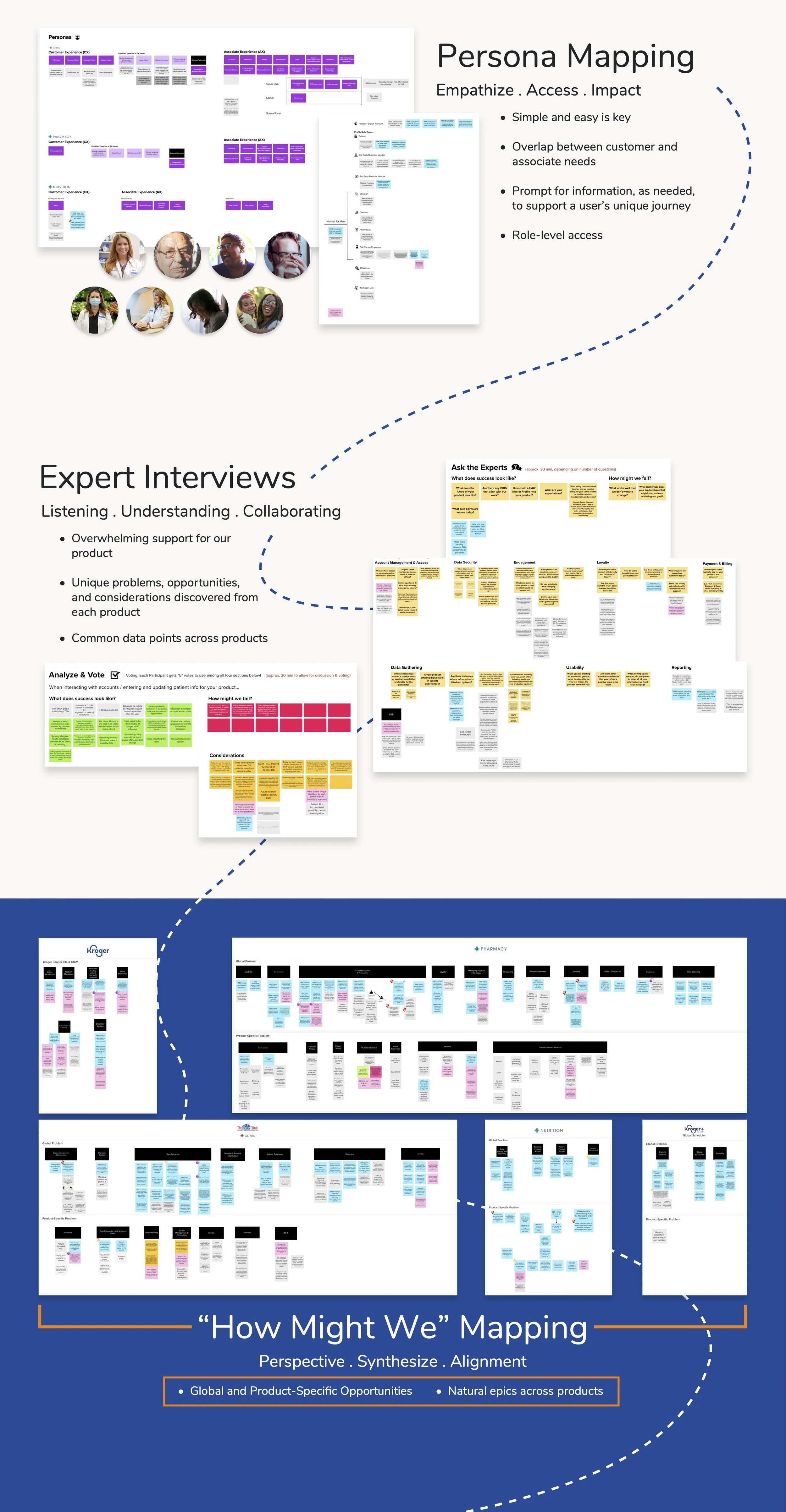
Let’s start with data. HIPAA certified customer research was conducted across all areas of business. A standardized internal associate survey was procured. Critical data point and technology analysis completed across dozens of software databases. Those alone tell unique stories, but it’s when they can tell a story across all areas of business that the insights really sing. All of these insights came together into a massive digital discovery board to synthesize related problems to solve across the ecosystem.
Though overwhelming at first, it was trivial to group common problems into working sets. Reframing those problems into standardized challenges made them relatable to the team, while voting on them allowed the team to be on the same page. Lastly, ideation activities and heat map voting resulted in prioritized big ideas. These fed concepts for leadership and business presentation.
The result?
Kroger Health is now well appointed with multiple strategies to meaningfully impact customer and associate problems. Multiple teams started immediately to chip away at high-impact, low effort solves, while allowing business and architects make future plans that are more evergreen.
Here’s to helping Kroger’s customers live healthier [and simpler] lives!