In-depth persona research and development
Kroger Health and Wellness had an idea of who their customers were. Existing pharmacy, clinic, telehealth, and grocery data tells one story, but in-depth customer behavior analysis and sentiment wasn’t fully known. On top of that, were the then-current business-defined segments of customers for grocery the right ones to be looking at from a Health & Wellness lens? I was asked to uncover this and develop rich, data-driven personas that could be evergreen for future business and product decisions.
Where to start? Education.
Not about others initially, but for myself. Every quarter, I’ve kept a practice where I assess my role, the business goals, and how I might add value directly to the company. I invested in training and certification from Nielsen Norman Group – specifically the course “Personas – Turn User Data Into User Centered Design”.
One surprising learning that I immediately put into practice was to move away from the current “proto-personas” that were being utilized. They were mostly organized (with good intentions) on demographic data. Why disregard those groupings? Shouldn’t this data be a primary focus? Yes, and no. As it turns out, personas help us overcome the drawbacks of data alone. Going beyond demographics, we can focus on attitudes and behaviors, which are often different between people with similar demographics. Rather than allowing the demographics to drive the primary segmentation, my job was to figure out how people align attitudinally and behaviourly.
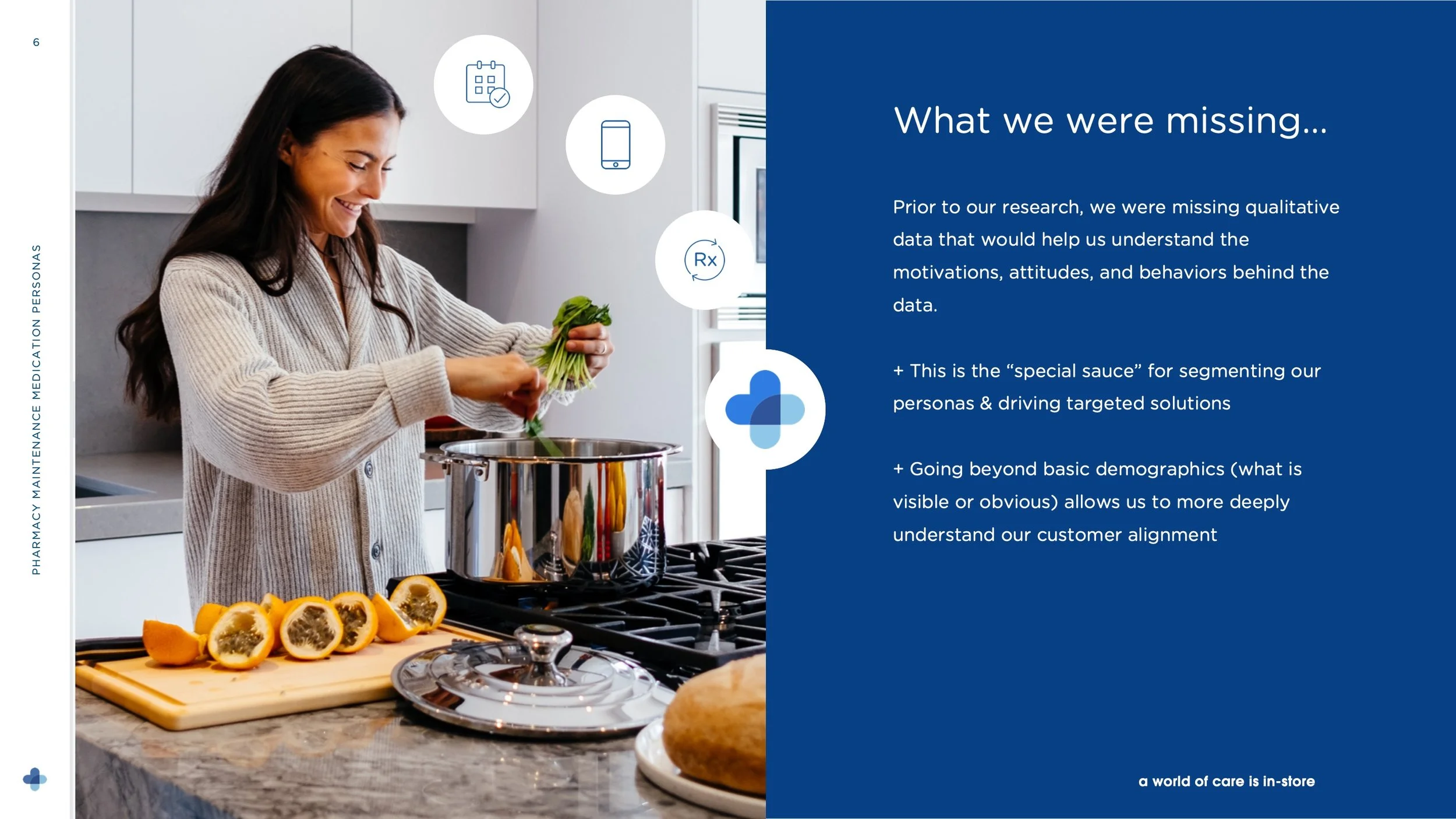
Rather than creating the personas in a silo and then imposing them on others, our team set out to include stakeholders and end users from the start. In practice, this allowed the broader group to optionally shape the research questions and goals, listen into interviews, and be a part of debrief sessions or insight readouts as the process was ongoing.
Our team decided to focus on Pharmacy first, as it is a primary driver for the Health & Wellness business. With that in mind, we drafted our research plan. This included relevant company objectives and key results (OKRs), related assumtions about our customers mindsets, behaviors, and how our technology was seen. We developed a set of hypotheses hand-in-hand with the product teams that would be utilizing these personas, as the personas will serve to help them make product decisions overtime. We also gathered as much existing research as possible as a part of the process to give us a full understanding of what gaps we currently have.
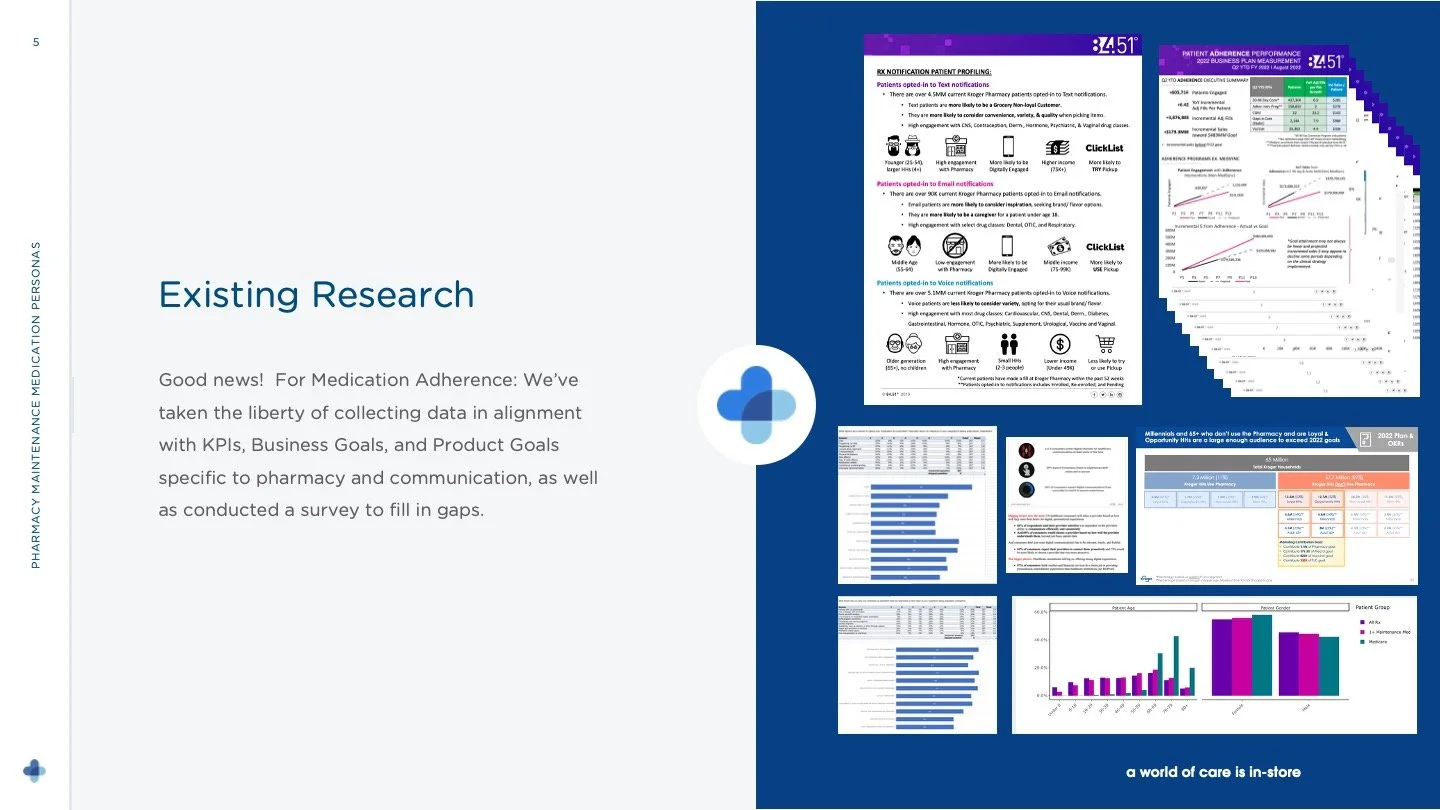
Sections of photo intentionally blurred to maintain confidentiality.
Then came the hard part. We scheduled, conducted, and evaluated a multitude of interviews across several primary variances. Although I can’t mention them in detail here for confidentiality purposes, in general: responsibilities, proactive vs. reactive approaches to medication management, differences in management methods, and frequency of those methods, are a few. We went through a rigorous process of coding each research insight from those initial variances to find patterns and clusters of people with similar characteristics. Lastly, we plotted users into categories of each defining attribute discover our final segmentation. Those were our personas.
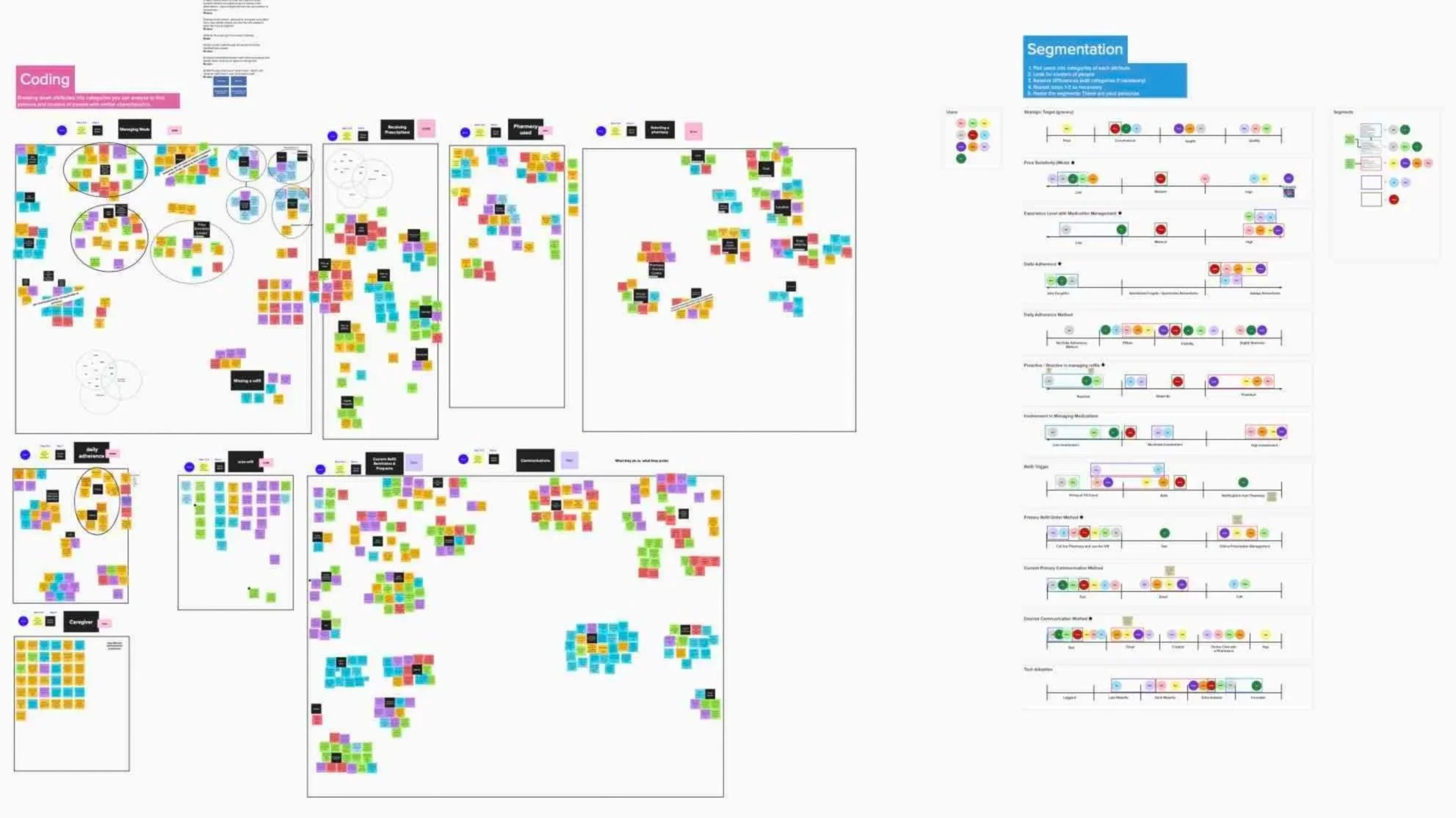
Overview of coding and segmentation processes. Content intentionally blurred for confidentiality.
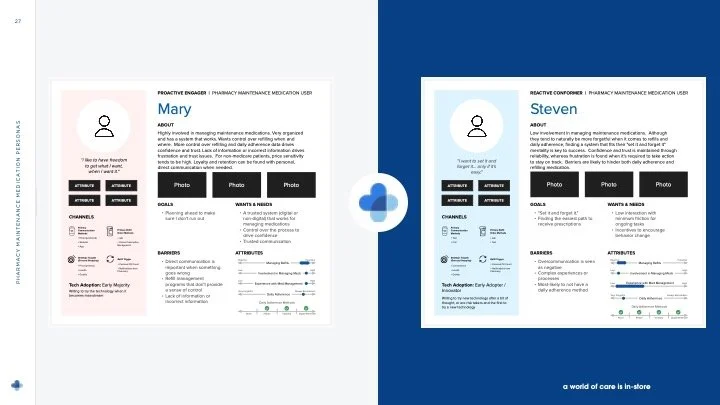
Two key personas emerged, both with mutliple groups of insights to act upon. This led to multi-user journey maps, user stories, and jobs-to-be-done frameworks to be aligned to these personas. More validation with customers overtime led to further galvanizing these personas to be evergreen in nature.
More importantly, it allowed the business and product teams to make faster, more confident decisions that are backed by real user insights. That’s the real value unlock of mature personas.
